
The top 5 things I’ve learned teaching quilting (so far!)
I started teaching quilting this year with a simple question to my friend Hillary: could I teach a quilting class at your studio? Not only was the answer a resounding yes, Hillary has provided a place and space for my new business to grow and thrive in an extremely short time!!
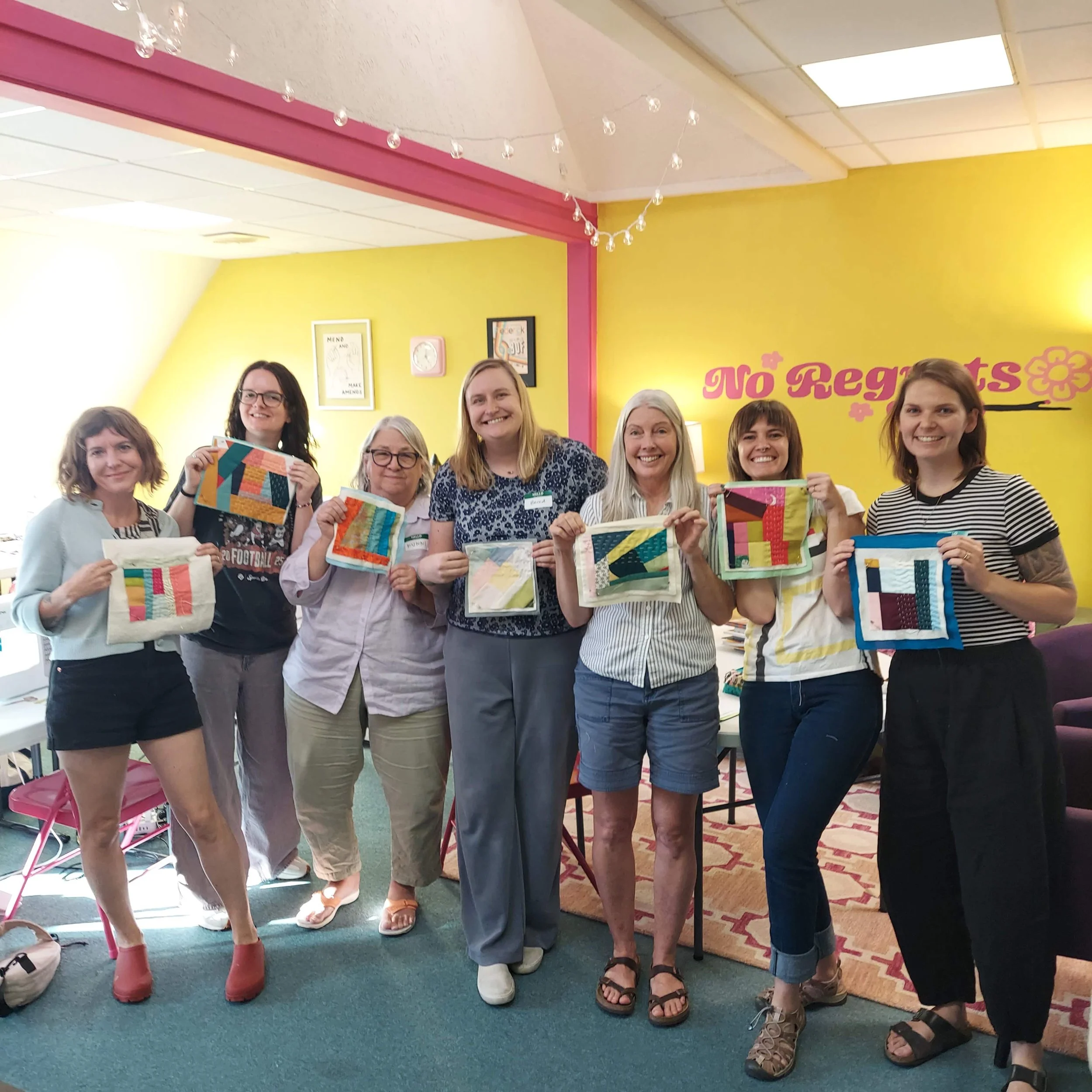
Hand Quilted Scrappy Mini, October 2025
While I’ve been a teacher in many capacities with many ages (from kids to adult!), I am pretty new to teaching quilting. In my experience so far, it has been a remarkable journey that has taken my creativity in new and fascinating directions - it feels similarly to how it felt when I first started quilting: every idea leads to 10 more, and I’m constantly working on and thinking about how and what to teach!
Here are the top 5 things I’ve learned teaching quilting (so far…):
5 Beware the simple things!
I spend a lot of time preparing for and practicing what I’ll say and how I will demonstrate for each workshop, but despite how many times I practice and how detailed my plan is, there is almost always a small detail I overlook, often something very simple! Often, this is something that I know how to do very well, and don’t recognize or realize that someone new to sewing and/or quilting won’t magically know how to do! I’m learning how to break things down into small steps and verbally describe and visually show how to do them in ways that are legible to others.
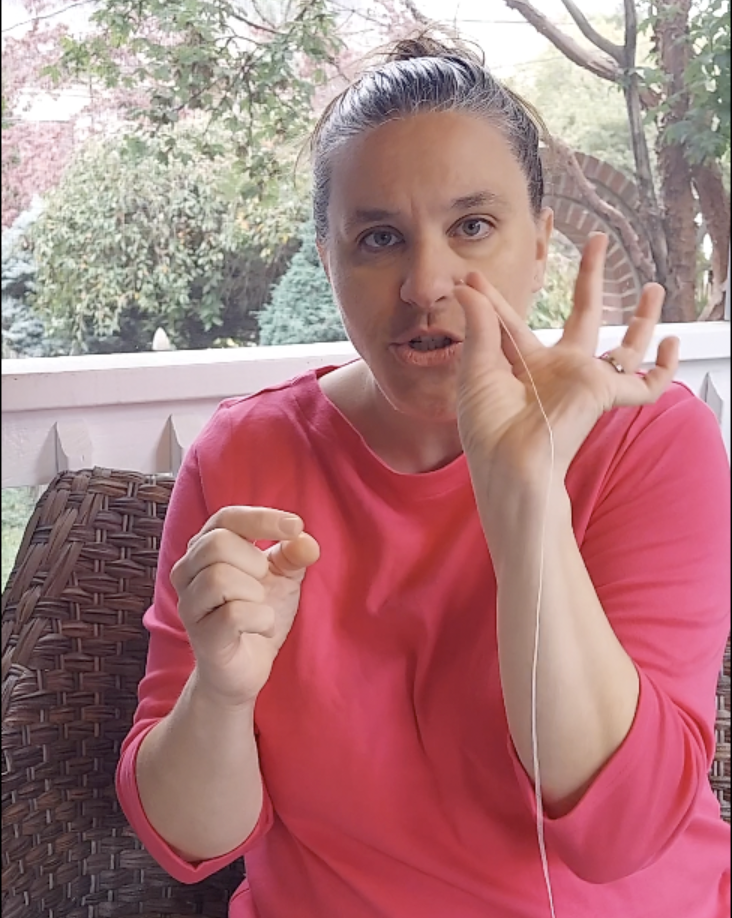
Demonstrating how to thread a hand sewing needle
4 Ask your students what they are hoping to gain from your time together
One of my mentors suggested asking students what they are hoping to gain from the workshop during introductions at the start of class. This helps in two ways: it gives me information about what the students want to learn, and it allows me to provide information about what I’ve planned - almost every time, these two things match up! But there are times when they don’t, or at least not perfectly, so having a conversation up front about expectations (going both ways), can help all of us clarify what we are hoping to gain and what we are prepared to give.
3 Narrow your focus to define your topic.
This is an ongoing lesson for me - I tend to try to pack so so much into every workshop!! The more I teach, the more I’m learning to keep my plans narrowly focused, which not only keeps the workshop itself do-able, but also clearly defines what the students will learn, which can help them make the choice of whether or not to take the workshop. For my recent Mini Story Quilt Top workshop, I had way more planned than we could accomplish in the time! The students and I talked about what a part two of the workshop might look like, and now I have plans for a new workshop covering just one aspect of what we covered during that one (Organic Applique!) but in much greater depth. Keeping the topic of a workshop or class narrowly defined also helps keep imposter syndrome at bay! When I am teaching a finite topic that I know I’ve studied/practiced/learned a LOT about, it’s harder for me to doubt or question myself along the way. Because I’m not trying to teach everything anyone has ever known about quilting, nor could I ever!
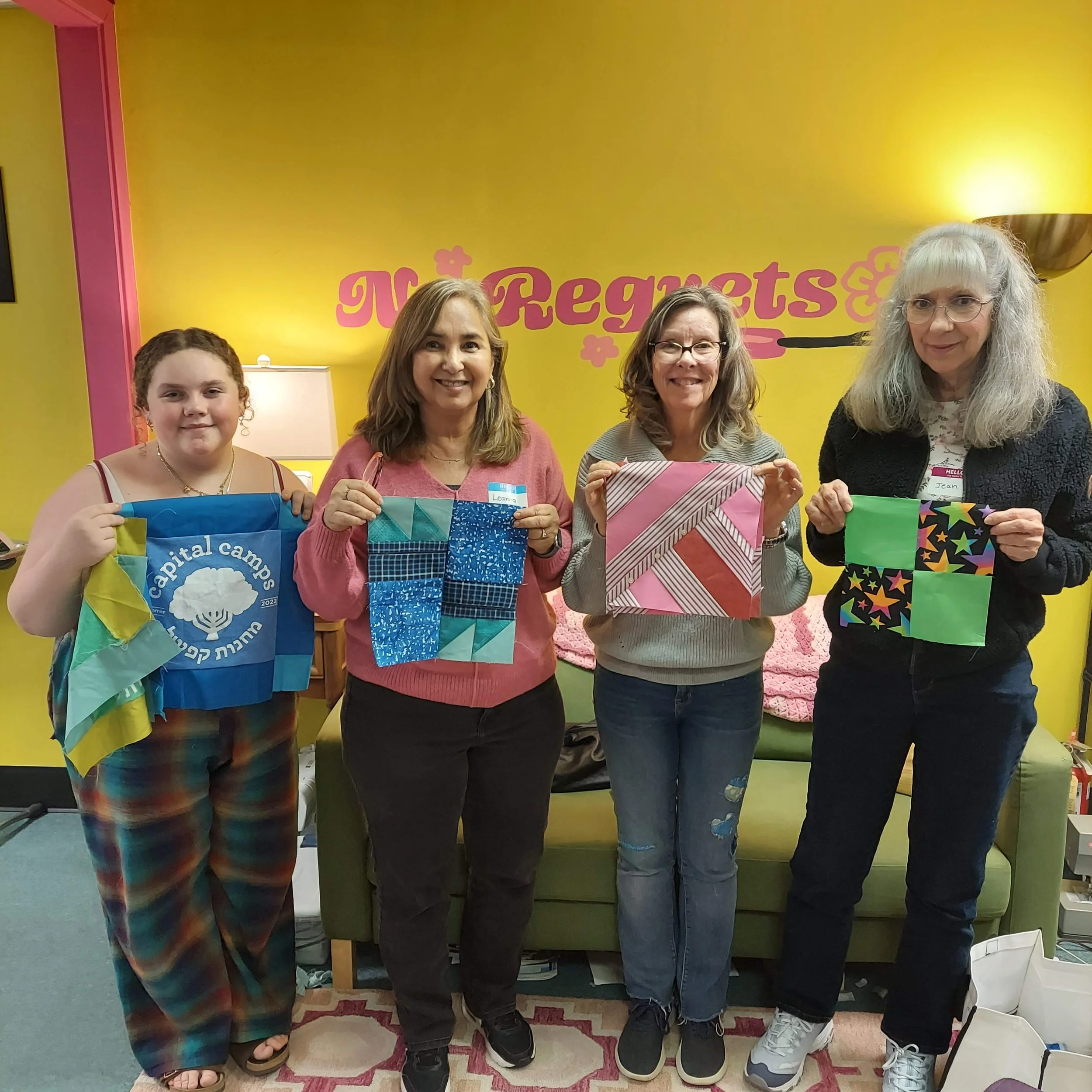
Garment to Quilt Blocks, November 2025
2 If you’re curious about teaching quilting, dive in and give it a try!
I had been thinking about teaching quilting for many months (possibly years?) before I gave it a try. There were things holding me back, and it took a great conversation with a dear friend to give me the nudge to try - and once I sent that first inquiry to Hillary, every next step opened up in my mind. When I wasn’t trying, when I was just thinking about it and second-guessing myself, I wasn’t in motion, I was stuck. I knew there was a chance that I could try teaching quilting and it wouldn’t be a fit for me - but that was information I didn’t know before I tried. What worked well in my experience is taking the smallest baby step I could, just to give it a try - you never know where it may lead, and the worst that could happen is you get valuable information that it’s NOT a path you want to pursue further.
1 Be prepared to learn at least as much as you teach!
Every single workshop, every single student, teaches me something new! The simplest way they do this is that they have different brains than I do, so whatever prompts I share will result in infinite possibilities of how students will interpret them! I also like to preface every workshop with the caveat that there are multiple ways to approach every aspect of quilting, and that I’ll share what I’ve learned and what works for me, but that there are always other ways and possibilities to explore. I love the idea of fostering a collaborative learning community, one where we all feel welcome and encouraged to share what we know and learn from one another.
Are you a quilting teacher or have you thought about teaching quilting? I’d love to know what you think about the above, and what you would add to this list!